Decide which part of the bridge to follow
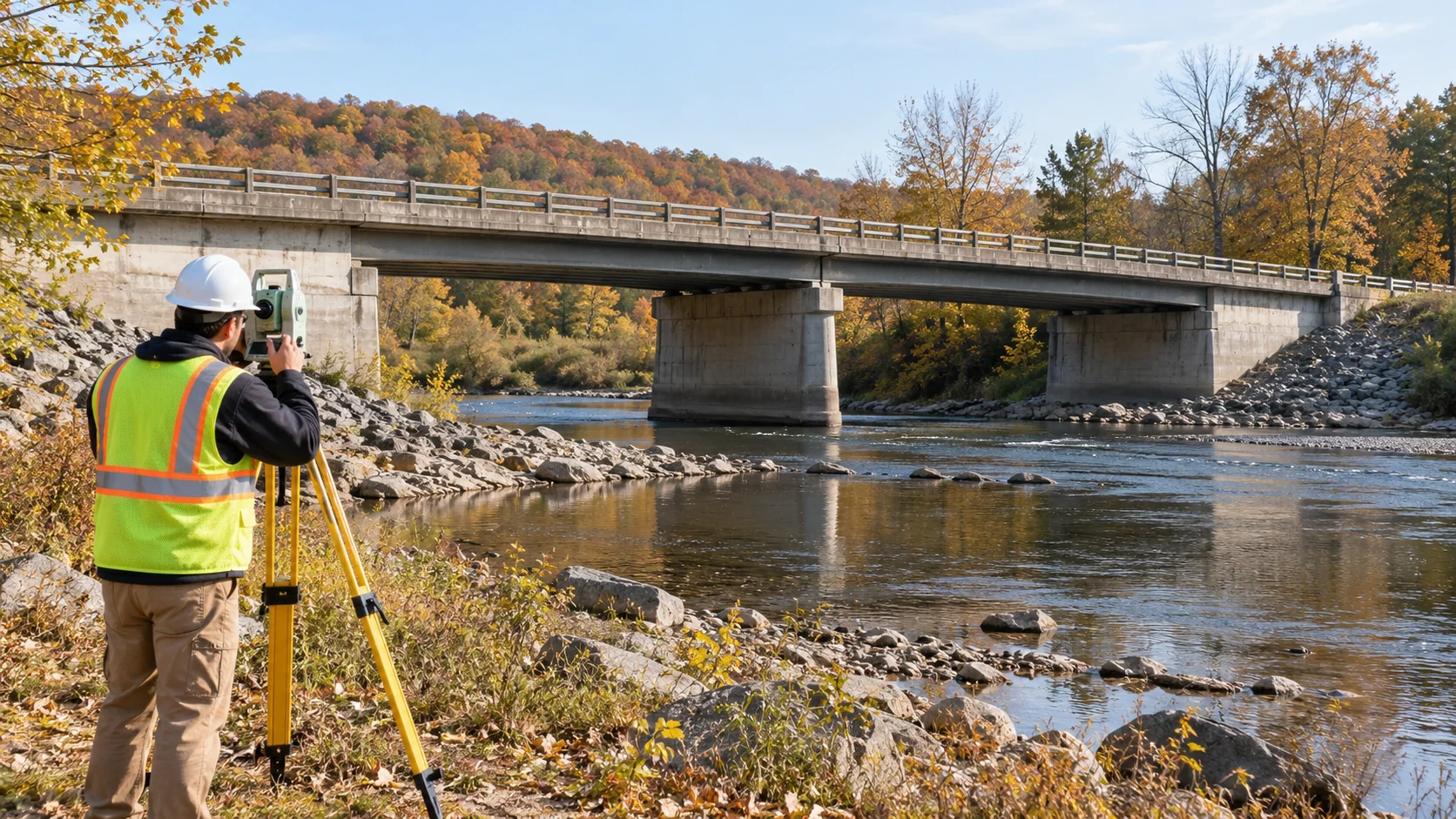
A survey might measure points on the deck, piers, abutments, or other chosen components. Their arrangement depends on the question. Points along a span can describe its shape; points around a support can help examine relative movement.
Each target needs to represent the intended component. A mark on a loose bracket may follow the bracket instead. The report should show the point locations and explain directions such as along the bridge, across it, and vertically.
Compare conditions as well as numbers
Imagine one survey takes place on a cool morning and the next on a hot afternoon. A difference may include a response to temperature. The engineer needs that context before interpreting the change.
Construction work and loading also matter. Record relevant conditions and times alongside the measurements. If a calculation adjusts for temperature or another effect, retain the original readings and explain the assumptions. An unexplained result should not simply disappear from the chart.
Match the timing to the behavior
A scheduled survey describes the bridge during its observation period. More frequent measurements may be useful during particular work stages. Neither automatically captures every quick response to passing traffic.
If the question concerns vibration or other rapid behavior, the system needs suitable sensors, sampling, and analysis. A programme intended to follow slow support movement answers a different question from one designed to study a brief dynamic response.
Keep the record connected through repair work
During rehabilitation, identify the stage associated with each reading: before removal, after replacement, or after a load transfer, for example. Agree necessary measurements before an operation begins.
If a component carrying a target is replaced, the new target needs a documented connection to the earlier record or a new starting point. Show gaps and changes clearly. Reference locations must also be checked so movement of the survey setup is not confused with bridge movement.
Agree the survey scope with Geobiro
Geobiro provides engineering surveys, control measurements, and documentation for infrastructure projects. Share the bridge location, relevant drawings, planned work stages, access conditions, and the engineer’s measurement requirements.
The survey outputs, timing, and reference can then be agreed for the project. Confirm specialist or continuous monitoring needs separately. The bridge engineer must define what changes require action and assess the results with inspections, loading information, and other evidence. No universal displacement limit can replace that judgment.
Common questions
Does routine surveying measure vibration?
Not necessarily. Vibration work needs a measurement system designed for the speed and type of behavior being studied.
Can a movement report confirm the bridge is safe?
It supplies measured evidence. A safety assessment requires the responsible engineer to consider that evidence with the bridge’s condition, design, loads, and other relevant information.
Further reading
This article was rewritten in October 2026 around the subject of the original Geobiro post. The original publication date is retained; the update date identifies the current text.