Measure the part of the building that matters
The engineer should help choose the points. A mark on a column, a structural wall, and a floor finish may describe different behavior. Convenient access is useful, but it should not be the only reason for selecting a location.
The arrangement needs to answer the actual concern. For example, if one side of a building is near an excavation, measurements elsewhere in the building help show whether the change is local or more widespread.
Use a height reference you can trust
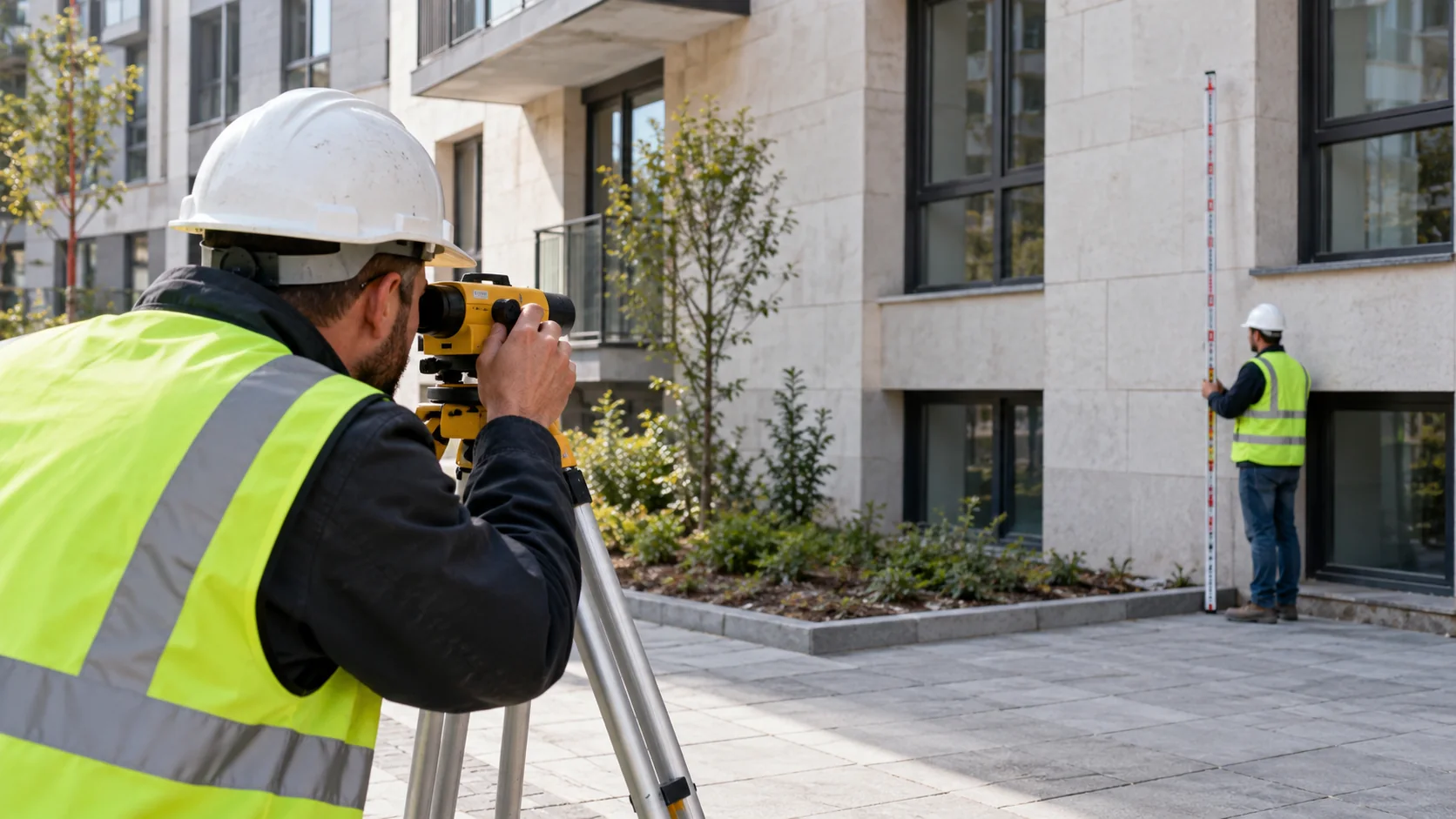
Leveling measures differences in height between marks. To compare visits, it needs a checked reference. A mark close to the work is not automatically stable simply because it looks permanent.
If that reference moves, the whole building can appear to rise or fall. The survey should include suitable checks and explain any change to the reference. This is why a single height reading without its supporting records can be difficult to reuse.
Start before the work where possible
The baseline is the starting set of readings. Take it before the relevant work begins where practicable, and record the building and site conditions.
Suppose a basement excavation has already reached its final depth before monitoring starts. Later readings can show what happens next, but they cannot establish how much settlement occurred during excavation. Make that limit clear instead of treating the first visit as the original condition.
Look for uneven movement
Differential settlement means that one part moves vertically by a different amount from another. It raises a different engineering question from similar movement across the whole building.
Charts should show the actual dates, change since the start, and change since the previous visit. Add relevant work stages and explain missing readings. Small changes need to be considered alongside measurement uncertainty, the doubt around each result. There is no universal settlement number that establishes safety.
Scope the measurements with Geobiro
Geobiro’s surveying services include level information and control measurements during construction. Provide the engineer’s requirements, building plans, planned works, earlier records, and access information so the measurement and reporting scope can be agreed.
Ask which parts of the building the points represent, how the reference will be checked, and what happens if a mark is damaged. Your engineer should set the observation schedule, response criteria, and conditions for ending monitoring. Measurements support that assessment; they do not diagnose the cause of movement.
Common questions
Does settlement always mean damage?
No. Its significance depends on the building, the amount and distribution of movement, loading, ground conditions, and other evidence.
Can old drawings provide the starting levels?
Only if the exact points, reference, dates, and measurement quality are suitable. Otherwise, the drawings may provide context without serving as a reliable baseline.
Further reading
This article was rewritten in October 2026 around the subject of the original Geobiro post. The original publication date is retained; the update date identifies the current text.