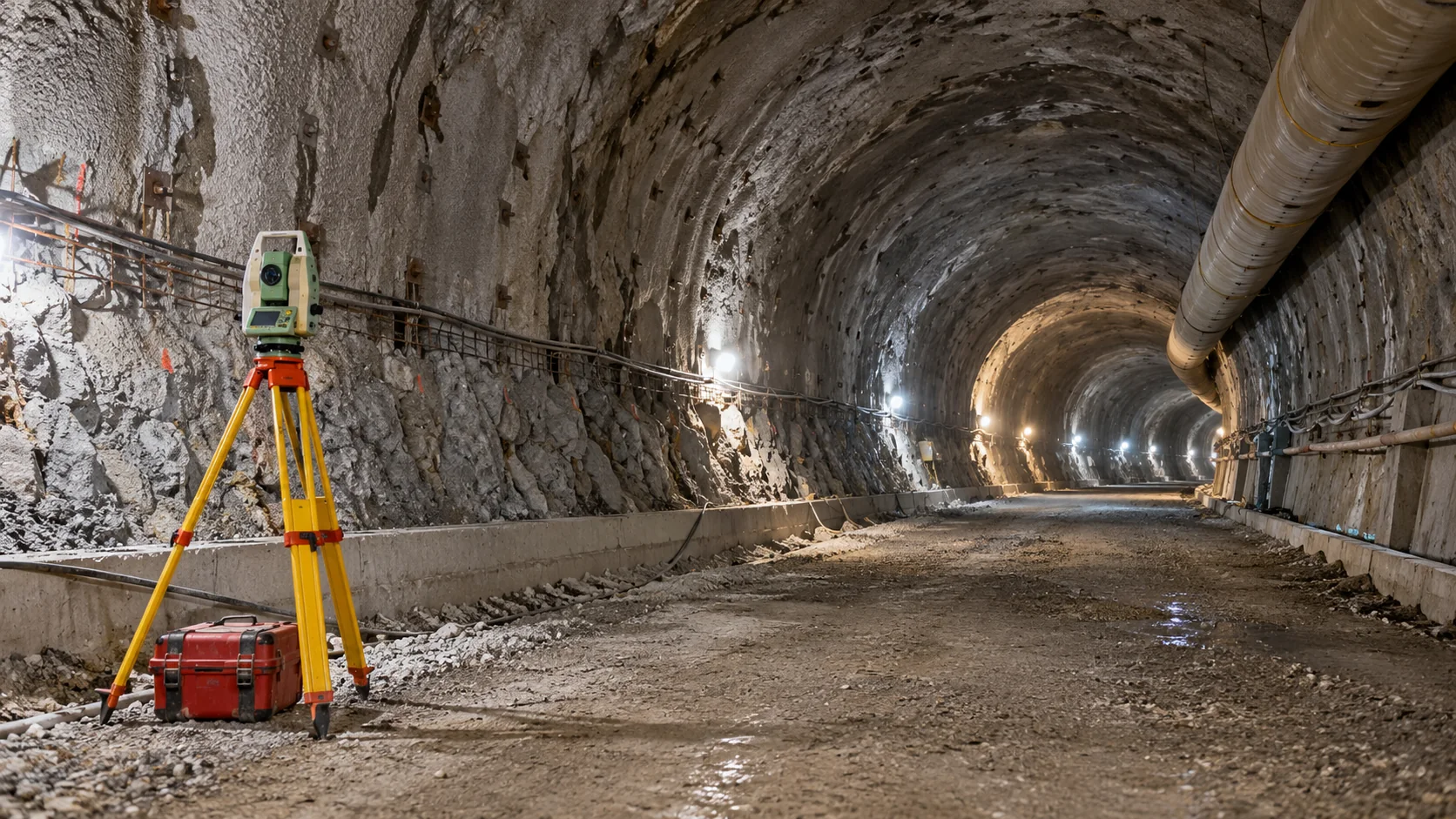
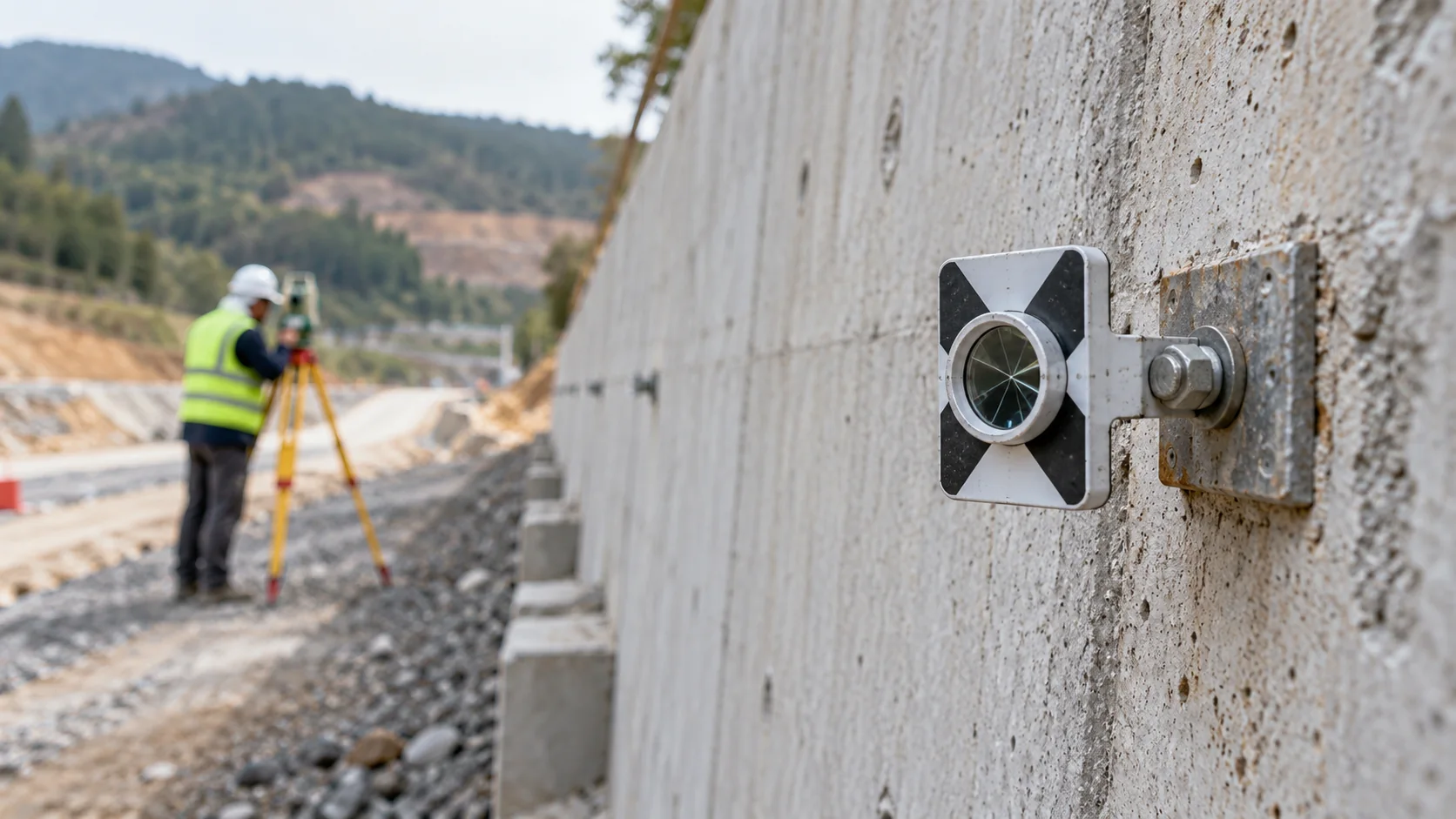
First, find the starting point
The baseline is the starting set of readings. A report may compare today’s measurements with that baseline, with the previous visit, or both. Those comparisons tell different stories.
Suppose a wall moved gradually over several visits but barely changed in the latest week. Its total change could still be important even though the latest step is small. Always check which dates the reported numbers compare.
Look at direction as well as size
Displacement means a change in position. A point may move sideways, vertically, or in both directions. The report should explain the units, axes, and signs. For example, it should say whether a negative height change means downward movement.
A plan showing arrows can help you see a pattern across several points. Check the arrow scale: arrows are often enlarged so small movements can be seen. One point cannot describe an entire building or an area that was never measured.
Ask how certain the result is
Every measurement has some uncertainty, meaning a range of doubt around the reported value. A tiny numerical difference is not automatically proof of physical movement. Ask whether the change can be distinguished from the variation expected in the survey.
Reference points matter too. These are the marks used to compare the object with its surroundings. If a reference point moves, other points can appear to move. The report should explain relevant checks, unusual readings, and any changes to the setup.
Read the history alongside the site activity
Charts are easier to understand when they show actual dates and important work stages. Missing readings should be visible. A straight line across a gap does not prove that nothing happened between visits.
Timing can suggest a question for investigation, but it does not establish cause. Movement after an excavation stage needs engineering review. The survey alone cannot tell you the remaining strength of a structure or whether it is safe.
Agree a readable report with Geobiro
Geobiro’s engineering survey services include control measurements and supporting documentation. When scoping repeated measurements, provide the engineer’s questions, point requirements, earlier records, and reporting deadlines.
Agree the comparison dates, drawings, tables, and file formats your team needs. A simple sample report can help everyone understand the expected output before work starts. Your engineer should define any response limits and who must be contacted when a result needs attention.
Common questions
Does zero mean nothing moved?
Not necessarily. It may be a rounded value or a change too small for the method to distinguish reliably.
Should an unusual reading be removed?
It should be investigated. Keep the original record and explain any correction or exclusion, rather than deleting an inconvenient result.
Further reading
This article was rewritten in October 2026 around the subject of the original Geobiro post. The original publication date is retained; the update date identifies the current text.